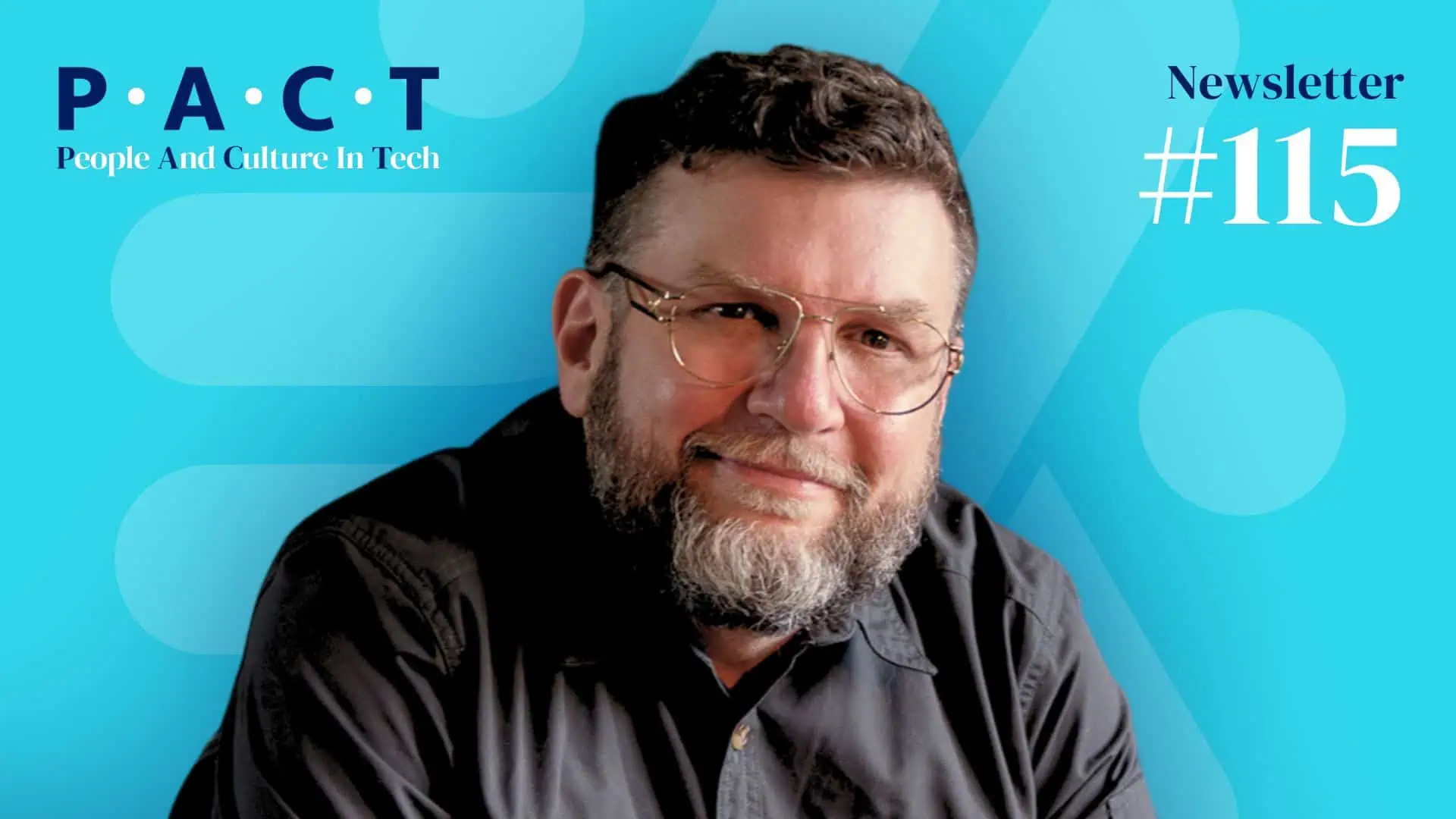

Welcome back to this week’s P | A | C | T news, your newsletter by Tech Talent North.
People leaders don’t need another reason to move faster.
As AI becomes part of everyday work, the bigger opportunity may be using it to create something increasingly scarce: capacity.
Ahead of Tech Talent North, Western Edition, we spoke with opening keynote speaker Joel MacCharles, Founder of Polaris Reach, about starting small, redesigning work and what AI should ultimately give people back.
Key takeaways:
- Start with small, recurring problems that create capacity.
- Focus on the result before choosing the technology.
- Use AI to make more room for human work, rather than simply producing more.

Start With The Hour You Want Back
The pressure surrounding AI can make experimentation feel more complicated than it needs to be.
Leaders are accustomed to tackling significant business problems. Joel believes that instinct can work against them when they’re still learning what this technology can do.
“Start with small things that add up to creating more time and capacity and do not start with your big giant problems.”
His starting point is deliberately modest: find an hour.
A recurring administrative task, interruption or piece of unnecessary friction can be a better place to experiment than an ambitious organization-wide transformation. Once that hour has been recovered, it can be invested elsewhere, building both capacity and confidence.
“Most of us are struggling with capacity, so the only thing that we have the most finite supply of is time. We never get it back.”
For People leaders balancing organizational change, employee expectations and growing demands around AI itself, that’s a compelling place to begin.
Stop Starting With AI
Joel is equally skeptical of conversations that begin with the technology.
He compares it to a carpenter talking about the hammer rather than the thing they’re trying to build. The tool matters only in relation to the outcome.
“Stop talking about AI. Talk about the business, your goal, your focus, your people. Then you can figure out what tools can help you on that journey.”
For HR, that means identifying the results the function needs to deliver, deciding which parts of the work should be protected and then working backwards.
In talent acquisition, for example, automating more of the candidate experience might save time while removing some of the work that matters most. A better use of AI could be creating capacity for more valuable human interaction.
Doing The Same Work Faster Isn’t Transformation
Many common AI use cases still replicate existing processes: writing an email faster, producing more content or creating a presentation in less time.
Joel sees greater potential in reconsidering the process itself.
“Don’t just think about what it can do. Expand your thinking and ask: what could it do differently from what we’re doing today?”
His background in learning and development offers a useful example. Rather than using AI to create training slides faster, organizations can now build interactive simulations and role-playing experiences without traditional coding.
“PowerPoint is a chalkboard from the 1800s. If you’re getting AI to automate your chalkboard, you’re just doing the same thing faster.”
As the tools mature, there is limited value in automating a process that no longer needs to exist in its current form.
Faster Isn’t Always Better
Speed has become closely associated with the promise of AI but Joel would rather remove it from the conversation.
“We are already going too fast in business. Many of us are working evenings, we’re working weekends, and the idea of going faster just means more work. To me, that means faster burnout.”
He compares it to finding a shorter road rather than driving faster along the same winding one. The aim is to reach the result more directly, even if getting there involves slowing down to experiment and learn.
That distinction matters for People leaders. If every productivity gain simply creates space for another meeting, project or expectation, the experience of work hasn’t necessarily improved.
The more interesting question is what should fill the space technology creates.
More Technology Can Create More Human Time
Joel has seen this within his own team.
Everyone at Polaris Reach has access to a digital coach built from Joel’s own writing, thinking and responses. It handles many routine questions that might previously have interrupted his day.
The result has been more human coaching, not less.
“We’re spending more time coaching our human beings than we were before because we’re not getting questions through the day about how do I do this?”
Face-to-face time can instead focus on career development, individual goals and conversations that genuinely benefit from another person being there.
It’s a useful model for People teams: use technology to reduce the friction surrounding human work so the human work gets more attention.
Leaders Don’t Need to Have It Figured Out
Another barrier to adoption receives considerably less attention: leaders are still learning too.
Joel has worked with executives whose organizations have been publicly celebrated for their use of AI, only to hear privately that those same leaders feel behind.
“If they just shared that feeling, we’d all find out that we’re in this together.”
For leaders accustomed to having answers, admitting uncertainty can be uncomfortable. Yet Joel believes modelling the learning process is more useful than simply handing employees a tool and expecting adoption.
“Are we modelling the behaviour? Are we showing people what’s possible? Are we giving examples? Are we supporting that? Or are we just holding people accountable to something that we ourselves are struggling to figure out?”
For People leaders helping organizations navigate a transformation they’re experiencing themselves, that openness can make shared learning much easier.
A Final Thought
A year from now, Joel believes people could have very different experiences of AI at work. Some may be moving faster and feeling more stretched, while others will have used the same tools to create capacity for better work, stronger relationships and more time for what matters.
The difference may come down to what we ask these tools to achieve.
“We’ve got to find ways to get these tools to serve us, and we need to stop serving the tools.”
Joel will bring that perspective to Tech Talent North, Western Edition this November in Vancouver as our opening keynote speaker, continuing the conversation around how People leaders can navigate a changing world of work.
The opportunity ahead is to create more room for the work, people and conversations that matter most.