
Welcome back to this week’s P | A | C | T news, your newsletter by Tech Talent North.
As tech companies reach beyond Canadian borders, People and Culture leaders are finding themselves at the centre of global expansion. Building teams across countries means navigating new laws, new cultures, and new ways of working, often all at once.
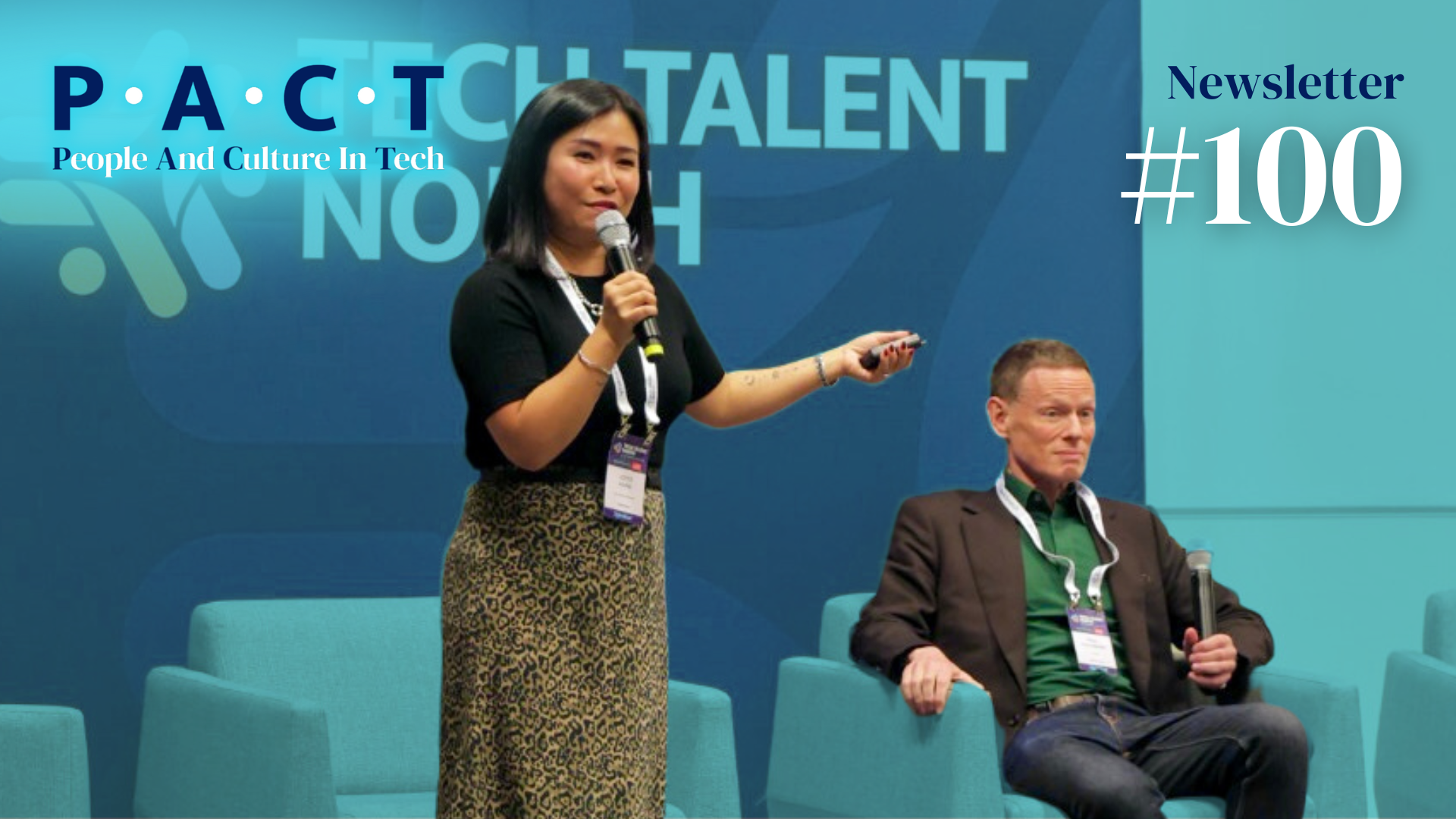
At Tech Talent North, Western Edition, Joyce Hung (Global Relay) and Paul Callaghan (Taylor Wessing) broke down what it really takes to expand internationally with confidence. Their session, The Borderless Workforce Advantage, delivered practical insights from scaling teams across the UK, US, EMEA and beyond.
They highlighted that successful global expansion depends on early HR involvement, with culture, compliance, planning and partnership forming the foundation.
Key takeaways:
- Choose markets intentionally. Talent access, client expectations and ROI (not trend lines) should guide expansion.
- Balance global culture with regional execution. Consistency matters but local market realities must shape how work gets done.
- Plan ahead and ask for help. The biggest risks of global growth come from assumptions, not complexity.

Why Global Expansion Starts With People, Not Geography
Joyce shared how Global Relay grew from 120 employees to more than 1,700 across multiple continents, including a UK team that scaled from under 10 people to more than 700. It wasn’t just headcount growth, it required intentional culture-building, local expertise and strategic planning.
“We always say we’re a global company with regional execution. That is important.”
The philosophy reflects a tension many fast-growing companies face: how to build one culture that can stretch across borders without forcing every region to work the same way.
Joyce put it simply: culture can be global but execution must fit the region.

Tactical Play 1: Secondments Build Culture Faster Than Policies
One of the most effective tools Joyce’s team uses is secondments, sending Vancouver-based employees who already embody Global Relay’s culture to new offices during early-stage growth.
“What it means is mainly we send employees from the Vancouver office… because they already know our culture. They were part of the people who built our culture.”
These employees set cultural foundations, onboard new teams and ensure early hires understand expectations.
But Joyce warned of a lesson learned: plan for what happens after the secondment.
- What if the employee doesn’t want to return?
- What if their compensation expectations shift?
- How do you transition them to a local contract?
Clear agreements, documented expectations and structured reintegration plans save months of confusion later.
Tactical Play 2: Research The Market Deeply, Way Beyond Salary Data
“Research and plan ahead… when you truly pick out which region you want to go to, you dig deep.”
Joyce emphasised that standard online research is rarely enough. The team learned quickly that:
- Talent pools differ wildly across regions
- Compensation differences can multiply costs
- Universities and local training programs can shape hiring strategy
- Clients expect local presence in regulated industries
For example, opening in London wasn’t just about talent. Global Relay’s major clients, banks and government agencies, expected local presence to take the company seriously.
The takeaway?
Global expansion succeeds when HR is involved early in market selection, not just in filling headcount afterward.

Tactical Play 3: Know When Employer Of Record (EOR) Works & When It Doesn’t
Paul offered a series of legal “watch-outs” that HR leaders found invaluable.
The biggest among them: EORs can be useful for a first hire in a new market, but they come with significant limitations (especially in Europe).
“The important thing to know… is there’s no concept of co-employment. These people will only be employees of the employer of record, which means they owe you no legal duties.”
This affects IP ownership, enforceability of non-competes and the ability to manage performance.
EOR is a great short-term tool, but once a market becomes strategic, shift to direct employment as soon as feasible.
Tactical Play 4: Culture Must Be Designed—Not Assumed
Joyce stressed that global growth complicates culture more than anything else.
“We know that culture, it’s very important. It’s not a part-time job. So we make it a full-time job.”
Her team intentionally hires full-time cultural ambassadors in major offices to support DEI initiatives, celebrate local events and create community while preserving global cohesion.
Joyce also cautioned against assuming Canadian norms apply elsewhere:
“We may think we’re doing them a favour… but it’s not the way to do it for whatever country you’re running the office. It can backfire.”
That includes how performance is managed, how termination is handled and even how quickly local talent expects decisions to be made.
Culture does not scale through documentation. It scales through people, clarity, reinforcement and regional ownership.

Legal Perspective: Start In The UK When Expanding To Europe
Paul underscored that Europe is not one market. It’s 40+ legal systems with fundamentally different employment and termination practices.
“Every country is completely different… the UK is the easiest with the biggest talent pool.”
He also highlighted unique advantages for Canadian employees:
“Anyone who’s Canadian and 35 or younger can basically get an unrestricted visa for three years to work in the UK.”
For companies testing the waters, this creates a low-friction entry point and enables easier secondments, rotations and talent mobility.
What This Means For People & Culture Leaders
Global expansion demands more than legal setup and payroll readiness. It requires:
- Cultural clarity
- Local expertise
- Leadership development across borders
- Documentation and compliance discipline
- And above all, the willingness to ask questions before committing
As Joyce summed up, “Expect to make mistakes… but prepare, ask for help, and know your peers.”