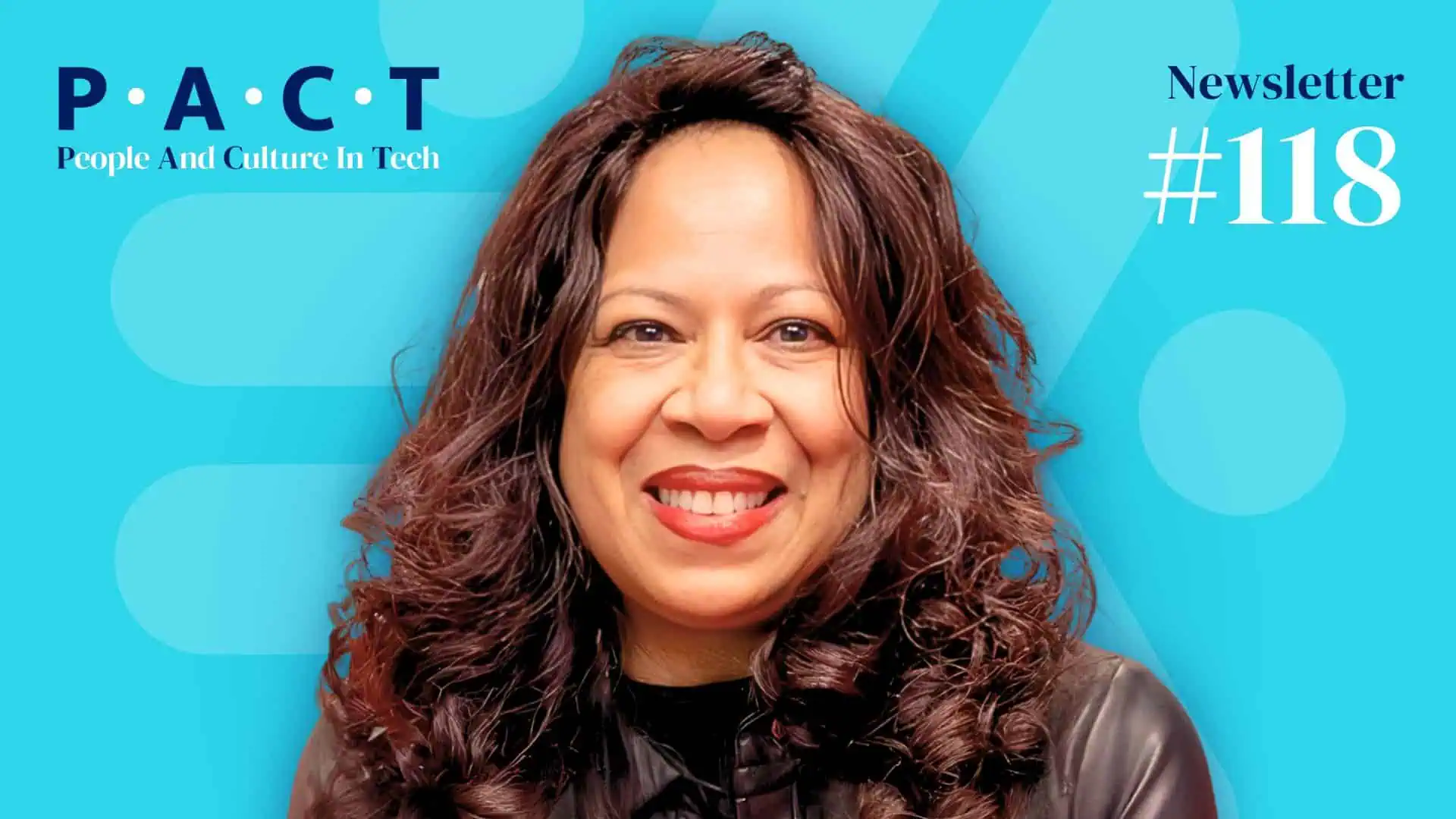

Welcome back to this week’s P | A | C | T news, your newsletter by Tech Talent North.
When every organization has access to the same AI tools, what will make yours stand out?
As AI reshapes the workplace, competitive advantage will increasingly depend on something harder to replicate: people, leadership and culture.
For Andrea Wynter of ADP, this is a defining opportunity for HR leaders to rethink workforce design, develop adaptable teams and unlock human potential.
We spoke with Andrea about leading through AI, the skills shaping tomorrow’s workforce and why culture will be key to lasting success.
Key takeaways:
- Leadership shapes AI’s impact, determining how new capacity creates value.
- Workforce architecture aligns human capabilities and AI with business outcomes.
- Adaptability matters alongside expertise as jobs and skills evolve.
- Culture and trust set organizations apart as technology becomes more accessible.

The Bigger Opportunity Behind AI
AI is changing how work gets done, reducing administrative demands and giving employees new tools to support everyday decisions.
For Andrea, these advances create an opportunity to think beyond efficiency.
“The real question isn’t how do we automate work? It’s how do we redesign work to create more value?”
When technology reduces time spent on routine tasks, leaders can redirect that capacity towards coaching, collaboration, innovation and stronger customer relationships.
Andrea points to talent acquisition as an example. AI can support interview scheduling, note-taking and résumé reviews, giving recruiters more time to engage with candidates, strengthen relationships and make informed hiring decisions.
“AI might be the catalyst for workforce transformation, but leadership will determine how employees experience it and the outcomes an organization achieves.”
For HR leaders, the opportunity is to influence how technology reshapes work and where its benefits are invested.
Rethinking Workforce Strategy
Traditionally, workforce planning has centred on headcount and skills. How many employees does an organization need, and what expertise should they bring?
Andrea believes AI calls for a broader approach, which she describes as workforce architecture.
Rather than starting with existing roles, leaders can begin with the outcomes their organization wants to achieve.
Which activities are best performed by people? Which are suited to AI? Where can the two work together most effectively?
“How do we build organizations where humans and AI create more value together than they could do alone?”
These questions encourage organizations to rethink established processes, redesign roles and develop capabilities that support emerging business priorities.
For HR leaders, workforce architecture offers a way to connect talent strategy more closely with business strategy.

Adaptability: The Skill That Will Shape The Future
As technology evolves, so do the skills organizations need.
Expertise remains valuable but Andrea believes the ability to learn, adjust and apply new knowledge will become increasingly important.
“AI is making expertise more accessible. So, the competitive advantage, or differentiator, will be adaptability.”
ADP research highlights an opportunity to strengthen workforce development:
- 21% of Canadian workers strongly agree they have the skills needed to advance in the future of work.
- 17% strongly agree their employer invests in the skills they need to advance.
Employees who strongly agree their employer invests in their development are also more likely to be productive, engaged and retained.
Andrea encourages organizations to look beyond traditional career progression and help employees develop bundles of capabilities: transferable skills such as adaptability, digital literacy and change management.
“It’s about having career conversations focused on the skills people need to create value for the business in the future.”
This shift also influences recruitment, where learning agility and a growth mindset will become increasingly valuable alongside technical qualifications.
Why Culture Becomes More Valuable As AI Advances
As AI becomes widely accessible, organizations will increasingly share similar technological capabilities.
Andrea believes their people and cultures will become even more important differentiators.
“Culture, leadership and talent will remain the competitive advantages.”
She compares this to the difference between national chains and local businesses. While chains offer consistency, independent businesses often attract customers through their personality, relationships and sense of community.
Organizations have a similar opportunity to distinguish themselves through experiences that technology cannot easily replicate.
Andrea sees this in everyday communication. AI can help leaders prepare messages, but employees still value communication that reflects an individual’s personality and understanding of their team.
The opportunity is to embrace technology while preserving the authenticity and relationships that make an organization’s culture distinctive.

Building Trust Through Shared Transformation
Andrea believes employees should have a meaningful role in shaping how AI changes their work.
“How do we ensure employees feel that AI is being designed with them as opposed to being done to them?”
Inviting teams to reconsider existing processes gives employees an opportunity to identify where technology can help, where human judgement matters and how their roles might evolve.
Their involvement can strengthen implementation while building confidence in the changes ahead.
Trust is central to this approach. ADP research highlights its relationship with employee motivation:
- Workers who trust their teammates are 16 times more likely to be highly motivated and committed.
- Those who trust their managers are 26 times more likely.
- Those who trust senior leadership are 41 times more likely.
For Andrea, these findings reinforce the importance of leaders who communicate openly, involve employees in decisions and support their development.
When people understand the purpose behind change and feel included in shaping it, organizations are better positioned to move forward together.

A Final Thought
Andrea believes HR leaders have an important opportunity to shape how organizations evolve.
“The future of work is not something that’s happening to us. It’s something that we can actively design.”
Technology will continue to advance but the responsibility of leadership remains grounded in helping people grow, contribute, adapt and find meaning in their work.
By connecting workforce strategy, skills development and employee experience, HR leaders can help organizations turn AI’s potential into lasting value.
The future of work will be technology-enabled and human-led, with culture providing the competitive advantage.
Continue The Conversation At Tech Talent North, Western Edition
Join Canada’s People & Culture leaders in Vancouver on November 17, 2026, to explore how AI, leadership and evolving workforce expectations are shaping the future of work.
Connect with peers and discover new approaches to building adaptable, people-centred organizations.