
Welcome back to this week’s P | A | C | T news, your newsletter by Tech Talent North.
Across the tech sector, organizations continue navigating restructures, leadership transitions and shifting priorities. For People and Culture teams, the challenge isn’t just managing the operational side of change, it’s protecting trust, clarity and culture when people need it most.
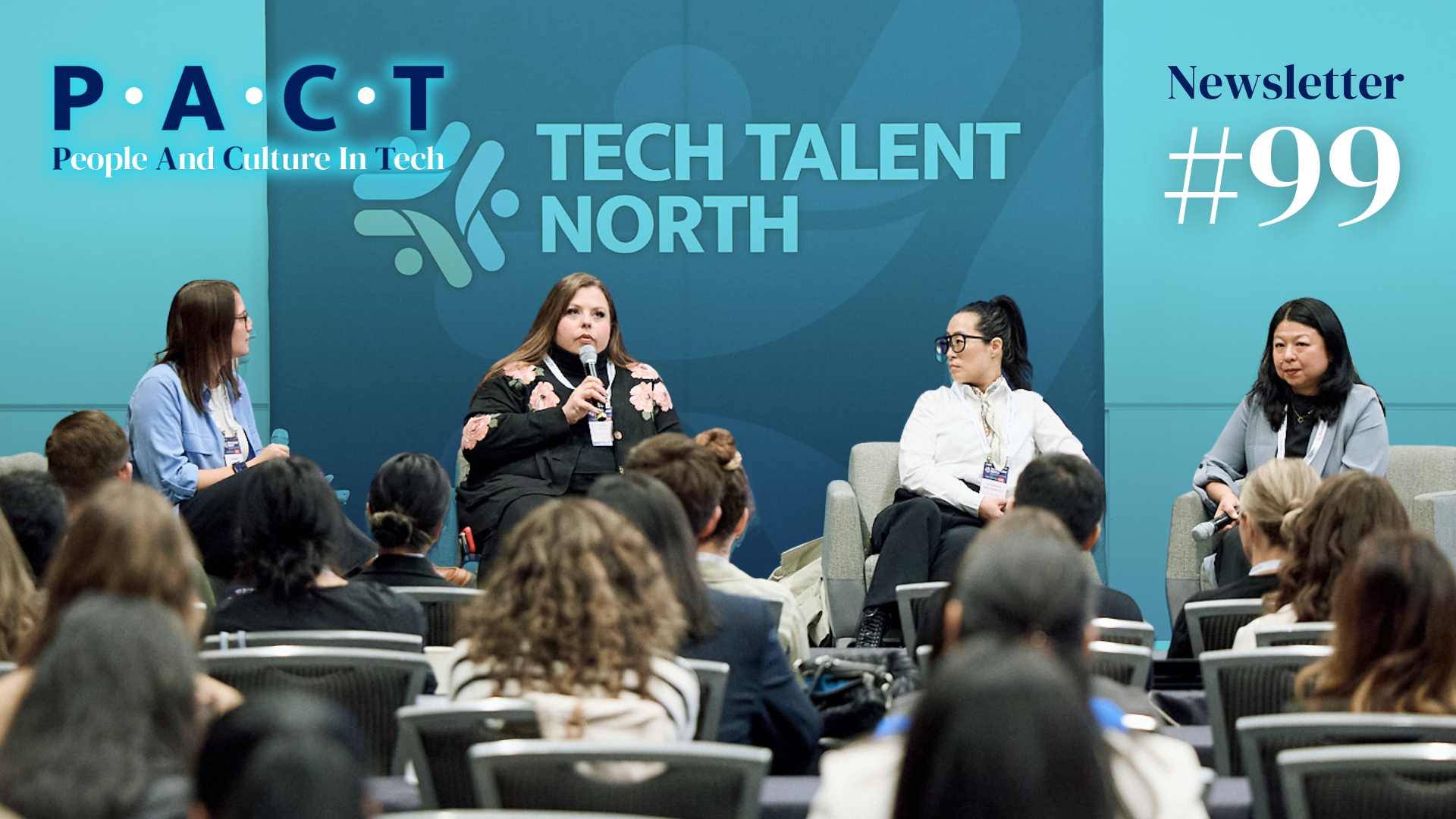
At this year’s Tech Talent North, Western Edition, the breakout session Keeping Culture Intact Through Layoffs & Leadership Changes brought this topic to the forefront. Moderated by Shawn Hewat (CEO & Co-Founder, Wavy), the panel featured Tara Ataya (Hootsuite), Shannon Archambault (IFS Copperleaf) and Tina Lai (Kabam).
Each panelist arrived with fresh, real-world experience.
Tara spoke just weeks after Hootsuite confirmed a global workforce reduction in late October. Shannon came from a post-acquisition environment still finding its footing. Tina shared lessons from three reductions, a significant cultural integration and evolving executive leadership at Kabam.
Their conversation was candid, human and deeply relevant for HR leaders steering teams through continued uncertainty.
Key takeaways:
- Preserve what matters. Values, rituals and clarity are more important during uncertainty than stability itself.
- Lead with transparency. Credibility grows when leaders communicate openly, even without every answer.
- Rebuild intentionally. Culture after change doesn’t return on its own. It is rebuilt through listening, visibility, and consistency.

Naming The Reality
Shawn opened by grounding the room in context: since 2022, more than 675,000 people in tech have been impacted by layoffs. Many in the audience had led or lived those changes.
What followed was a conversation about culture, grounded in lived experience, hard lessons and perspectives from leaders who have had to make difficult decisions while caring for the people behind them.
Transparency As A Long-Term Investment
Tara, speaking from recent experience at Hootsuite, emphasised that transparency remains one of the strongest tools leaders have.
Employees asked directly whether more changes were coming.
“We said yes, there are. We didn’t know what they were yet, but we were transparent.”
This honesty created short-term distraction, but Tara shared that it strengthened credibility in the long term, with people feeling respected, informed and treated like adults.
It also helped leaders set the tone for how the organisation would navigate the period that followed: grounded, open and aligned.

Aligning Process To Culture
Tina spoke openly about a lesson that continues to shape her approach today. Kabam’s first layoff was executed quickly and in a way that didn’t reflect the company’s people-centred DNA.
“We didn’t embrace the values and the culture of Kabam… we just made the decision in isolation. It wasn’t true to our culture and a lot of trust was broken.”
She noted that while the decision itself was necessary, how it was handled created lasting pain. Later layoffs were approached differently, tailored by department, informed by leaders and grounded in values.
The shift didn’t erase the challenges, but it did preserve dignity, reduce anxiety and repair trust.
Dignity In Departure
Shannon shared one of the most powerful examples of what care looks like in practice.
When Copperleaf was acquired by IFS, a reduction followed. Despite their team being reduced from 21 to 8, HR chose a high-touch approach:
“One hundred individual one-on-one calls. It was the best decision and I wouldn’t change it.”
What surprised her most were employee reactions:
“So many people said, I’m sorry you have to deliver this news, or asked for a few hours to write a handover.”
The moment highlighted something important: when employees have been consistently treated with respect, even the hardest processes are met with humanity.
After The Event: Presence Over Perks
The panelists agreed that culture is shaped not only by how layoffs happen, but by what leaders do in the days and weeks after.
Tina shared that Kabam prioritised open Q&A forums, leadership visibility, and listening (not perks, events or surface-level morale boosters).
“I’ve seen leaders try to throw perks or parties at people… but people are looking for a clear plan forward, not celebrations.”
Shawn echoed this sentiment, with listening tours, coffee chats and fireside sessions that often create more impact than any formal program.

Doing Less, Better
One of the most resonant messages came from Tara:
“It’s not about doing more with less. It’s about doing less. We need to start saying no to things.”
After any major restructure, remaining employees often feel pressure to take on everything. Tara argued that leaders must actively prioritise, set boundaries and remove work.
Clear prioritisation signals care, prevents burnout and restores confidence.
When Cultures Shift, Clarity Matters
Shannon made a critical point that resonated with every leader in the room:
“When an acquisition happens, the culture that was will never exist again.”
Copperleaf initially avoided naming this reality, hoping the transition would feel temporary. But clarity, she said, would have helped employees process the change more constructively.
Culture does not stay frozen. It evolves. Acknowledging that openly helps people understand where they now belong and where the organisation is headed.
Tactical Plays HR Leaders Can Use Now
- Communicate with intention
Two-email system: one for impacted employees, one for those not impacted. Reduces confusion and anxiety. (Tina) - Exit with dignity
One-on-one conversations, access to say goodbye, personalised severance support. (Shannon) - Make leaders visible
Open Q&A sessions, listening forums, clear messaging about next steps. (Tara and Tina) - Help teams move forward
Shift communication toward where the organisation is going. Survey response rates doubled after Kabam made this change. (Tina) - Prioritise clearly
Set decision filters so employees know what to decline. (Tara) - Build leadership capability
Invest in management essentials training early, especially for newly promoted leaders. (Tina)
What This Means For People & Culture Leaders
- Transparency is a trust builder, not a risk.
- Culture must align with action, especially during hard moments.
- Dignity matters at every stage of the employee lifecycle.
- Leadership visibility is more impactful than programs.
- A new culture emerges after change. Name it, shape it and help teams move with it.
This session offered a reminder that culture is not defined by the absence of change, but by how leaders show up during the hardest parts of it.