
Welcome back to this week’s P | A | C | T news, your newsletter by Tech Talent North.
Over the past few years, compensation became the fastest way organizations could respond to a market that wasn’t slowing down. It helped teams secure talent quickly, hold onto critical skills, and stay competitive when demand consistently outpaced supply.
What’s becoming clearer now is how those decisions are playing out over time. As the market begins to stabilize, many HR leaders are working through the ripple effects, where short-term fixes are starting to surface as longer-term challenges.
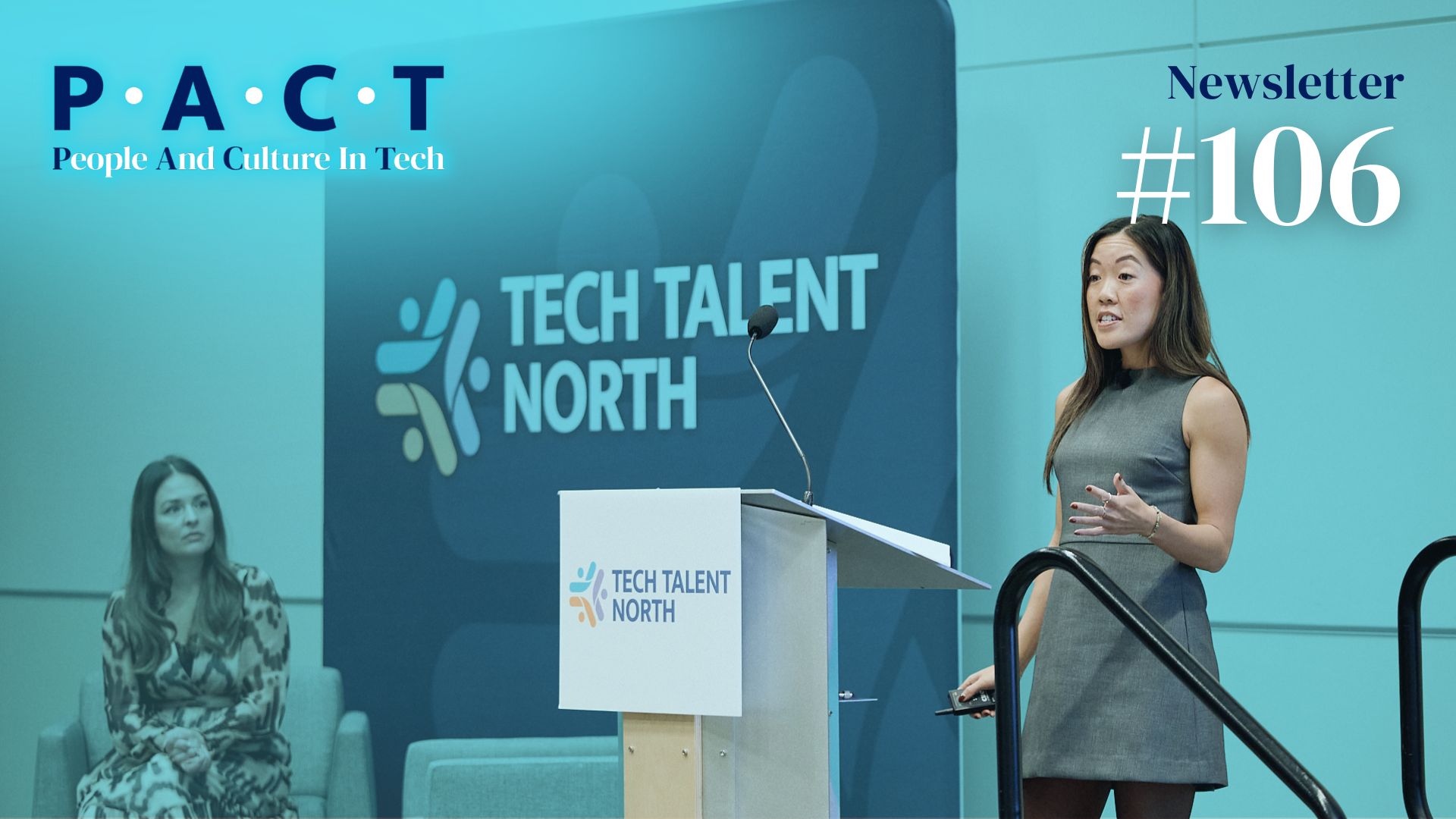
At Tech Talent North, Western Edition, Liz Elliott and Jennifer Kwong from Mercer shared what they’re seeing across the market and where that shift is showing up most clearly inside organizations.
Key takeaways:
- Compensation alone won’t sustain retention in a stabilizing market
- Employees are staying longer, but not always more engaged
- Pay decisions made quickly can create longer-term structural issues

When Pay Moves Fast, Everything Else Has To Catch Up
During the height of market pressure, compensation became the quickest way organizations could keep up. It’s given teams a way to move quickly, secure talent and stay competitive when demand has consistently outpaced supply.
That speed solved immediate challenges and what’s becoming clearer now is how those decisions are playing out over time.
“Even though pay for tech roles has cooled… there’s still more demand for tech talent than there actually is supply,” said Jennifer Kwong.
The pressure never really disappeared, it just shifted and many organizations are now feeling that shift internally.
Retention Has Improved But Engagement Tells A Different Story
At first glance, things look more stable. Employees are staying longer and movement across the market has slowed.
What sits underneath that stability is more complex.
“You might have heard the terms job hugging or quiet quitting… employees choosing to stay put where they are,” noted Jennifer.
In many cases, staying is less about engagement and more about caution.
Liz shared an example that brought this into focus. An employee who had remained in their role was seen as lacking ambition, when in reality the organization hadn’t created a clear path forward for them.
“Because our organiszations have been so busy trying to retain talent, it’s possible that we haven’t given much thought to what we do with people after, when they do actually stay,” said Liz.
Retention became the priority but what follows after that decision hasn’t always kept pace.

Pay Decisions Are Now Showing Up In Unexpected Ways
During periods of rapid change, compensation decisions were often made quickly and with limited room for reflection.
They made sense in the moment but they’re creating tension now.
“What that means is that your new hires are coming in higher in the range… what about the person who was hired the year earlier?” said Jennifer.
This is where internal equity starts to feel uneven.
New hires enter at higher points in the range while existing employees begin to question where they stand. Over time, those gaps become harder to ignore.
Closing them isn’t as simple as adjusting pay. It requires a closer look at structure, progression and how those decisions are explained and understood across the organization.
Compensation Can’t Carry The Entire Strategy
For a period, increasing base salary addressed multiple challenges at once. It was visible, immediate and effective.
Over time, that reliance has started to narrow the overall approach.
“The people who get paid the most for the job that others can do the same get laid off first,” said Liz.
When compensation carries too much weight, it also carries more risk.
Performance, engagement and long-term retention are shaped by more than pay alone.
Career development, clarity of role, meaningful work and flexibility all play a role in how people experience their work and decide whether to stay.
Compensation remains important, it just can’t do all of the heavy lifting.
The External Narrative Is Shaping The Talent Pipeline
There’s another factor that sits just outside day-to-day HR activity but has a lasting impact.
How the industry is perceived.
“When industries don’t collaborate to control their narrative… I have witnessed this absolutely obliterate the talent pipeline,” said Liz.
Perception influences who chooses to enter the industry, how careers are shaped and where talent flows over time.
If that narrative shifts too far, the impact builds gradually. Fewer people enter, fewer develop the necessary skills and competition for experienced talent increases.
For HR leaders, this extends workforce planning beyond internal strategy into how the broader story of the industry is being told.
A More Balanced Approach Moving Forward
What stood out from this session wasn’t a move away from compensation but a need to rebalance its role.
Pay decisions don’t exist in isolation. They shape structure, progression, engagement and trust. When one moves quickly, the others need to keep up.
The organizations navigating this well are stepping back and asking more integrated questions.
- How are we supporting employees who choose to stay
- Where are our structures no longer aligned with our decisions
- What are we offering beyond compensation that sustains performance over time
The market has shifted and expectations have shifted with it.
Join 300+ senior People & Culture leaders at Tech Talent North, Eastern Edition on June 3rd 2026 in Toronto, Canada’s conference for HR leaders in tech.