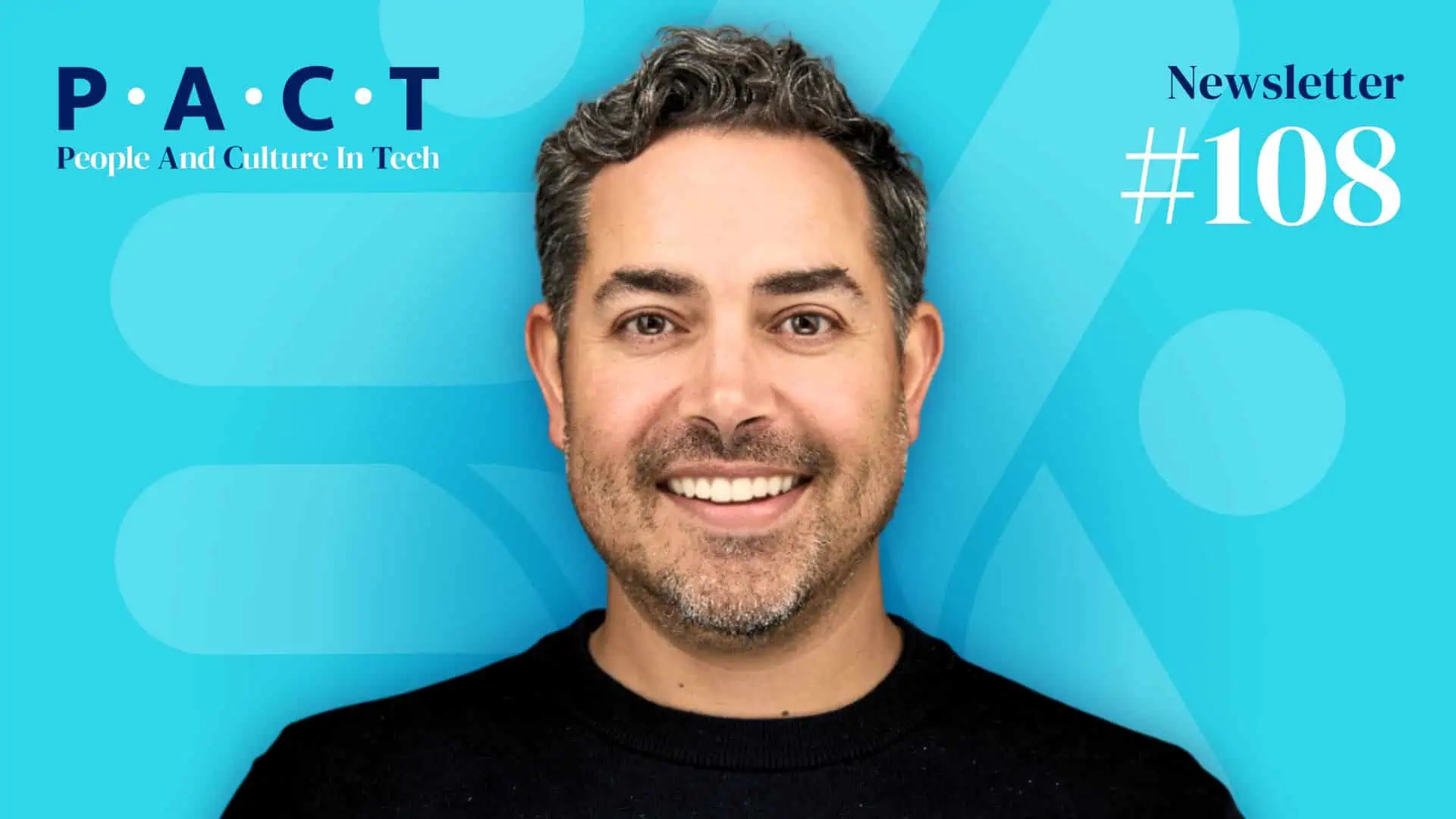

Welcome back to this week’s P | A | C | T news, your newsletter by Tech Talent North.
Work has never been more connected. Messages move instantly, calendars stay full and collaboration spans time zones with ease.
Even so, many teams still feel the gap. Alignment takes longer to build, trust doesn’t come as easily and culture often feels more talked about than lived.
We sat down with Sean Hoff, CEO of Moniker, to explore what’s missing and why shared, in-person experiences continue to shape how teams connect and perform.
Key takeaways:
- Offsites shape retention and alignment when treated as a deliberate investment
- Real connection develops through shared experience, not constant communication
- Structure matters, but the most meaningful moments are often unplanned

Stepping Away To Move Forward
There is a growing tendency to treat offsites as something discretionary. They are often positioned as a reward or an extra, something that can be paused when budgets tighten or priorities shift.
Sean sees it differently.
“I push back on anyone who calls an offsite a nice-to-have,” he said, reflecting on how often these experiences are misunderstood or measured too narrowly.
What tends to be overlooked is the role these moments play in shaping how people feel about their work and the organization they are part of.
“If you want a team that genuinely believes in where the company’s going, that buys into the culture, that sticks around when a recruiter comes calling… that kind of buy-in doesn’t come from an all-hands email.”
That level of commitment builds over time, through shared experiences that create a sense of belonging and context that is difficult to replicate elsewhere.
Stepping away from the day-to-day is not a break from the work. It’s often what allows the work to improve.
Where Connection Takes Shape
Much of modern work is designed for efficiency. Conversations are structured, interactions are purposeful and time is managed closely.
Within that environment, connection tends to stay at a surface level.
“The real connection happens when people are slightlyout of their comfort zone together,” Sean explained.
Those moments are rarely dramatic. They are often simple situations where people are navigating something unfamiliar at the same time. A new activity, a shared challenge or even a moment of uncertainty where no one has the answer.
In those settings, people show up differently. Titles matter less and patterns shift.
“You learn things about your colleagues that you might not have learned on a typical Zoom call… and that interaction you have with them going forward is forever changed.”
That change carries back into everyday work. Conversations become easier. Collaboration feels more natural. Trust builds in a way that cannot be forced through process alone.

Rethinking Structure
Offsites are often planned with the same mindset used for operational work. Time is optimised, agendas are filled and outcomes are tightly defined.
Sean offers a different approach.
“One third of your time on an offsite should be spent doing work, one third on team building, and one third intentionally left open,” he said.
That final portion tends to feel uncomfortable for many leaders. It can be difficult to leave time unstructured, especially when there is pressure to make the most of time together.
The value of that space becomes clear once the offsite is underway.
“The best moments don’t necessarily happen during the scheduled activity. They happen in the margins.”
Unstructured time allows conversations to unfold without an objective. It creates room for people to connect in a way that feels natural rather than directed.
Those are often the moments that stay with people long after the offsite ends.
Intention Over Spend
There is a common assumption that meaningful offsites require significant budget.
Sean’s experience suggests otherwise.
“You don’t need a big budget to create a meaningful experience,” he said.
Clarity tends to matter more than cost.
When the purpose is clear, decisions become easier. The experience can be designed in a way that reflects what the team actually needs rather than what looks impressive on paper.
Some of the most effective moments come from simple ideas. A walk with a small group, a set of well-considered questions or time that allows people to talk without interruption.
“It costs us nothing… and people can be genuinely moved.”
What makes those moments impactful isn’t scale but the level of thought behind them.

When It Falls Short
Offsites tend to fall short for reasons that have little to do with location or logistics.
“If 90% of your agenda is presentations… you’ve planned a conference your employees can’t leave,” Sean said.
That approach keeps people in the same mindset they were in before they arrived. It limits interaction and leaves little room for connection.
Another common challenge is over-structuring. Leaders often try to maximize every moment, filling the schedule with activities and sessions.
“When you force participation in everything, it stops being fun almost immediately.”
People respond to intention. They can tell when something has been designed with care versus when it has been assembled to meet expectations.
That distinction shapes how the experience is received and whether it has any lasting impact.
Starting With Purpose
Before any planning begins, there is a more important question to answer.
“Just get clear on what your actual purpose for doing this,” Sean said.
That purpose could be alignment, recognition or simply creating space for the team to reset.
Once that clarity is in place, the rest of the experience starts to take shape. Decisions around structure, activities and time allocation become easier to make.
Without that clarity, offsites often become a mix of competing priorities that dilute their effectiveness.
A Final Thought
Teams today aren’t short on communication. Instead, they’re often short on shared context.
Sean’s perspective offers a reminder that connection isn’t built through frequency alone. It develops through experience, through moments where people step outside their usual roles and interact in a different way.
Offsites create the conditions for that to happen.
When they’re designed with intention, they do more than bring people together for a few days. They shape how those people work together long after they return.
Join 300+ senior People & Culture leaders at Tech Talent North, Eastern Edition on June 3rd 2026 in Toronto, Canada’s conference for HR leaders in tech.